The Neuroscience of Forgetting: Why Your Brain Erases Memories on Purpose
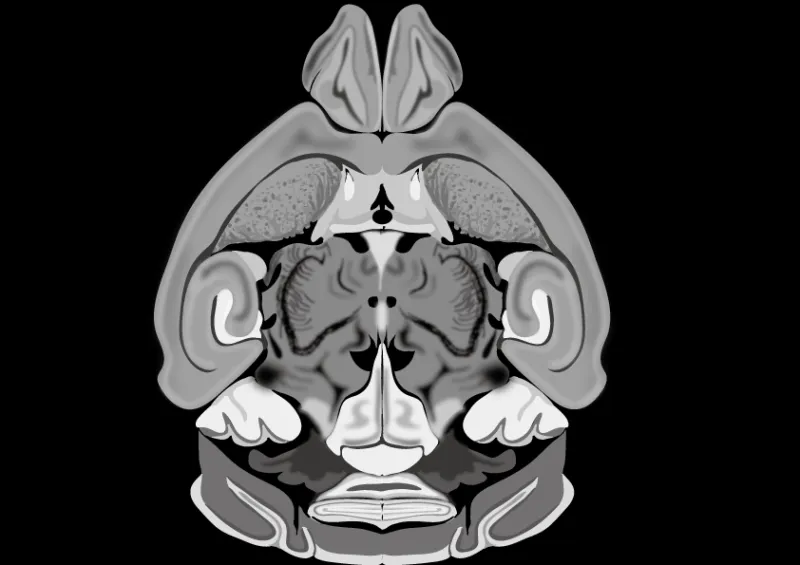
Photo: DataBase Center for Life Science (DBCLS), CC BY 4.0, via Wikimedia Commons
Ask most Americans what they fear most about aging, and cognitive decline — specifically, the loss of memory — consistently ranks near the top. The cultural anxiety around forgetting is so pervasive that entire industries have been built around memory enhancement: from nootropic supplements to brain training platforms. Yet a growing body of neuroscientific research is arriving at a counterintuitive conclusion. Forgetting is not the enemy of a healthy mind. In many critical respects, it is one of the brain's most sophisticated and necessary operations.
Memory Is Not a Filing Cabinet
For much of the twentieth century, memory was conceptualized as a kind of biological storage system — an archive that accumulated information and ideally retained it indefinitely. Loss, under this model, represented system failure. That framework, while intuitive, is increasingly understood to be incomplete.
The brain does not passively store memories the way a hard drive stores files. Memory formation is a dynamic, reconstructive process involving the hippocampus, prefrontal cortex, and a distributed network of cortical regions. Each time a memory is retrieved, it is temporarily destabilized and then reconsolidated — sometimes with subtle alterations. This process, known as memory reconsolidation, suggests that the brain is continuously editing its own records rather than simply preserving them.
Critically, forgetting is not merely the absence of remembering. Research has identified active neural mechanisms dedicated specifically to memory suppression and elimination. Inhibitory interneurons in the hippocampus, for example, can suppress the reactivation of specific memory traces. Dopaminergic signaling has been implicated in determining which memories are tagged for retention and which are candidates for degradation. The brain, in other words, is not failing when it forgets — it is working.
Why the Brain Prunes: The Functional Case for Forgetting
The adaptive value of forgetting becomes clearer when one considers what life would look like without it. Cases of hyperthymesia — a rare condition in which individuals retain near-perfect autobiographical memory — offer a compelling illustration. Rather than experiencing their exceptional recall as a gift, many individuals with hyperthymesia describe it as profoundly burdensome. The inability to let go of past experiences, including painful or trivial ones, can interfere significantly with present-moment functioning.
Computational models of memory have arrived at similar conclusions. A neural network that retains every input without discrimination becomes increasingly inefficient over time, a phenomenon researchers call catastrophic interference. Selective forgetting allows the brain to generalize from experience — to extract meaningful patterns rather than being overwhelmed by the raw data of individual events.
This principle has direct implications for learning. Studies examining sleep and memory consolidation have found that the brain does not simply replay and strengthen all memories during sleep. It actively selects which memories to consolidate based on their perceived relevance, while allowing others to decay. This process of sleep-dependent memory optimization appears to be critical for skill acquisition and conceptual learning. Students who attempt to memorize everything without allowing for natural forgetting may paradoxically impair their ability to retain what matters most.
When Forgetting Fails: The Clinical Dimension
Understanding forgetting as an adaptive process also reframes several significant psychiatric and neurological conditions.
Post-traumatic stress disorder (PTSD) is, in many respects, a disorder of pathological remembering. Traumatic memories in PTSD are not simply vivid — they are intrusive, involuntary, and resistant to the normal processes of emotional dampening that occur as memories age. Neuroimaging studies have shown that individuals with PTSD exhibit heightened amygdala reactivity and diminished prefrontal inhibitory control, a combination that may impair the brain's capacity to contextualize and ultimately suppress distressing memory traces.
Obsessive-compulsive disorder (OCD) presents a related but distinct pattern. Research suggests that some individuals with OCD exhibit deficits in what is termed "memory confidence" — an impaired ability to trust that a past event has been adequately encoded. This may drive compulsive checking behaviors as the brain repeatedly attempts to compensate for a perceived gap in its own records.
Conversely, certain neurodegenerative conditions — including Alzheimer's disease — involve the catastrophic failure of the very mechanisms that normally distinguish between memories worth preserving and those that can be safely released. The result is not selective forgetting but indiscriminate memory loss, which underscores how tightly regulated the healthy forgetting process actually is.
Therapeutic Implications: Engineering Forgetting
If forgetting is an active neurobiological process, it becomes a potential therapeutic target. This is an area of active and, in some respects, ethically complex research.
Propranolol, a beta-blocker commonly used to manage hypertension and anxiety, has been investigated for its capacity to blunt the emotional intensity of traumatic memories when administered during reconsolidation windows. Early clinical trials have shown promise in reducing PTSD symptom severity, though the approach remains experimental and has not yet achieved widespread clinical adoption.
More recently, research into the endocannabinoid system has illuminated a molecular pathway through which the brain naturally facilitates the extinction of fear memories. Endocannabinoid receptors in the amygdala and prefrontal cortex appear to play a regulatory role in fear extinction — the process by which conditioned fear responses are suppressed over time through repeated non-threatening exposure. This has generated interest in cannabinoid-based adjuncts to exposure therapy, though rigorous clinical evidence remains limited.
Cognitive behavioral approaches, meanwhile, have long leveraged the brain's natural reconsolidation mechanisms without necessarily framing them in those terms. Techniques such as cognitive restructuring and prolonged exposure therapy may work, at least in part, by repeatedly activating distressing memories in safe contexts, allowing for the gradual updating of their emotional valence.
Rethinking Cognitive Enhancement
The emerging science of forgetting carries a broader message for how American culture approaches brain health. The dominant paradigm — more memory, sharper recall, optimized retention — may be missing a fundamental dimension of cognitive wellness. A truly healthy memory system is not one that remembers everything. It is one that remembers the right things.
For clinicians working with patients who present concerns about memory, this reframing can be genuinely reassuring. Normal, age-related forgetting — the inability to recall a colleague's name or where one placed one's keys — reflects, in part, the brain's reasonable prioritization of information it deems more relevant. This is categorically different from the pathological forgetting associated with dementia.
For researchers, the neuroscience of forgetting opens a productive frontier. If the mechanisms of memory suppression can be more precisely characterized, the therapeutic possibilities — for trauma, for anxiety disorders, and potentially for conditions of pathological rumination — are considerable.
The brain that forgets is not a brain in decline. It is a brain doing exactly what it evolved to do: making room for what comes next.