When Your Brain Becomes Your Biggest Obstacle: The Neuroscience Behind Procrastination
Photo: Goleisureintl, CC BY 4.0, via Wikimedia Commons
Most people who procrastinate already know they are procrastinating. They can articulate exactly what they need to do, why it matters, and what the consequences of delay will be. They intend to start. And then they do not. This gap between intention and action — maddening, familiar, and seemingly irrational — has puzzled philosophers, frustrated productivity coaches, and, more recently, captured the serious attention of neuroscientists.
What researchers have uncovered over the past two decades reframes procrastination entirely. It is not a time-management problem. It is not laziness dressed up in polite language. It is a neurobiological conflict — a recurring standoff between brain systems that evolved for very different purposes, playing out in real time every time you open a new browser tab instead of finishing that report.
Two Brain Systems at War
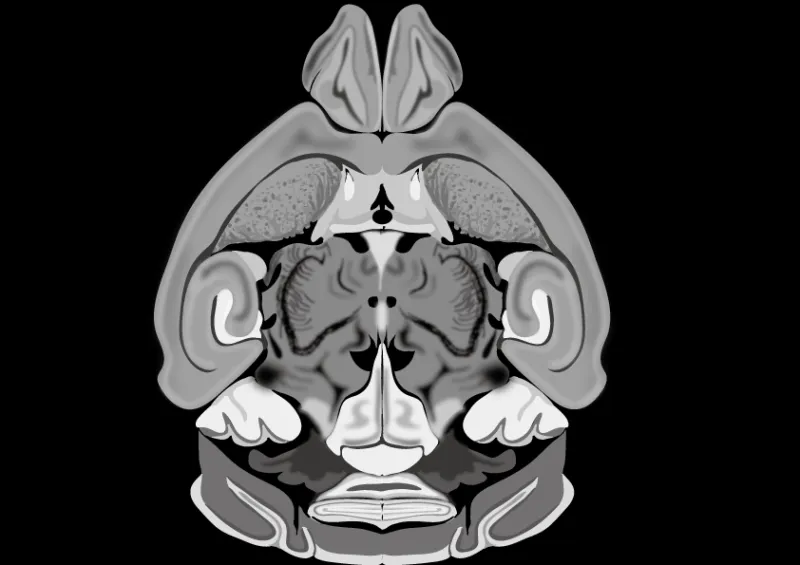
At the core of the procrastination loop are two distinct neural networks that routinely come into conflict: the limbic system, which governs emotion, reward, and threat detection, and the prefrontal cortex (PFC), the brain's executive command center responsible for planning, abstract reasoning, and long-term goal pursuit.
The limbic system — particularly the amygdala — operates on immediacy. It scans the environment for emotional salience, flags potential threats, and drives the organism toward comfort and away from discomfort with remarkable speed. When a task feels tedious, overwhelming, or tied to fears of failure or judgment, the amygdala activates, generating a low-grade aversion response. This is not metaphorical; neuroimaging studies have documented measurably greater amygdala activity in chronic procrastinators compared to non-procrastinators when they are confronted with challenging tasks.
The prefrontal cortex, in theory, should override this response. It can weigh future consequences, suppress impulsive reactions, and redirect behavior toward goals that extend beyond the present moment. In practice, however, the PFC is metabolically expensive, slower to activate than the amygdala, and highly sensitive to fatigue, stress, and emotional load. When those conditions are present — and for many Americans navigating demanding work schedules, financial pressure, and chronic sleep deprivation, they almost always are — the limbic system wins the standoff.
The Temporal Discounting Problem
Compounding this neural conflict is a cognitive phenomenon called temporal discounting, sometimes referred to as delay discounting. The human brain does not evaluate future rewards and present rewards on equal terms. Neuroimaging research has consistently shown that immediate rewards activate the ventral striatum and other dopaminergic reward circuitry far more powerfully than equivalent rewards framed as available in the future.
In practical terms, this means the brain assigns disproportionately high value to whatever feels good right now — scrolling through social media, watching television, chatting with a colleague — and systematically undervalues outcomes that are real but distant. The deadline that is two weeks away registers as almost abstract compared to the immediate relief of avoidance. This is not irrationality in any simple sense; it reflects a deeply embedded neural architecture shaped by evolutionary pressures that favored immediate survival over long-term planning.
Chronic procrastinators, studies suggest, exhibit steeper temporal discounting curves than their peers. Their brains discount the future more aggressively, making the neurological pull toward present comfort correspondingly stronger.
Why Willpower Advice Misses the Point
Conventional productivity culture tends to frame procrastination as a motivational deficit — a problem solved by wanting it badly enough, setting firmer goals, or cultivating stronger discipline. From a neuroscience standpoint, this advice is not only insufficient; it can actively worsen the problem.
Telling someone to simply try harder places the entire burden on the prefrontal cortex — the very system that is already losing the battle against limbic reactivity. Moreover, self-criticism and shame, which frequently accompany procrastination, are themselves potent amygdala activators. The guilt of having avoided a task increases emotional aversion to that task, making it even harder to begin. Neuroscientist and psychology researcher Fuschia Sirois has documented this cycle extensively, finding that self-compassion — not self-flagellation — is among the strongest predictors of reduced future procrastination.
Working With Your Neurology, Not Against It
If procrastination is a neurobiological phenomenon, then effective interventions must engage the relevant brain systems rather than simply demanding they behave differently. Several evidence-based approaches do exactly that.
Reduce task aversion at the source. Because amygdala activation is triggered by the emotional character of a task — not merely its difficulty — reframing how a task is perceived can meaningfully reduce avoidance. Research by psychologist Timothy Pychyl and colleagues suggests that connecting a dreaded task to intrinsic values (why it matters personally, not just instrumentally) attenuates the aversion response and lowers the barrier to initiation.
Shrink the initiation threshold. The moment of beginning is neurologically distinct from the act of continuing. Studies on behavioral momentum suggest that starting a task — even in a minimal, low-stakes form — activates engagement circuitry that sustains effort once it is underway. Strategies such as committing to just two minutes of work on a task exploit this principle directly, reducing the amygdala's threat signal by making the initial ask small enough to be non-threatening.
Restructure the reward timeline. Because the brain's dopaminergic reward system responds to immediacy, artificially compressing the distance between action and reward can counteract temporal discounting. Temptation bundling — pairing an avoided task with something genuinely enjoyable, such as a favorite podcast or beverage — co-activates reward circuitry during the task itself rather than only upon its completion.
Protect prefrontal resources. Given that the PFC's capacity to override limbic reactivity is finite and depletable, timing matters. Scheduling cognitively demanding or emotionally aversive tasks during periods of peak mental energy — typically in the morning for most adults — preserves prefrontal executive function for when it is most needed. Adequate sleep, which is essential for PFC recovery, is not a lifestyle preference in this context; it is a neurological prerequisite for sustained self-regulation.
Leverage implementation intentions. Research by psychologist Peter Gollwitzer has demonstrated that forming specific if-then plans ("If it is 9:00 a.m. on Monday, I will open the document and write the first paragraph") dramatically increases follow-through compared to simple goal-setting. These plans appear to reduce the cognitive load of initiation by automating the decision — effectively offloading the work from the PFC to a more habitual, procedural system.
The Brain Can Be Retrained
Perhaps the most consequential finding from contemporary neuroscience is that the procrastination loop, while deeply rooted, is not immutable. The prefrontal cortex retains neuroplasticity throughout adult life, and consistent behavioral practice — particularly mindfulness-based interventions that strengthen the PFC's capacity to observe and regulate emotional reactivity — has been shown to alter the functional relationship between the amygdala and executive systems over time.
Procrastination, in other words, is not destiny. It is a pattern of neural activity, shaped by biology, reinforced by habit, and — crucially — amenable to change when the right levers are engaged.
Understanding that the struggle is neurological rather than moral does not excuse avoidance. But it does change the terms of the conversation. Rather than asking why a person lacks the character to simply get things done, the more productive — and scientifically honest — question is: which brain systems are in conflict here, and what conditions would shift the balance?
That is a question neuroscience is increasingly equipped to answer.